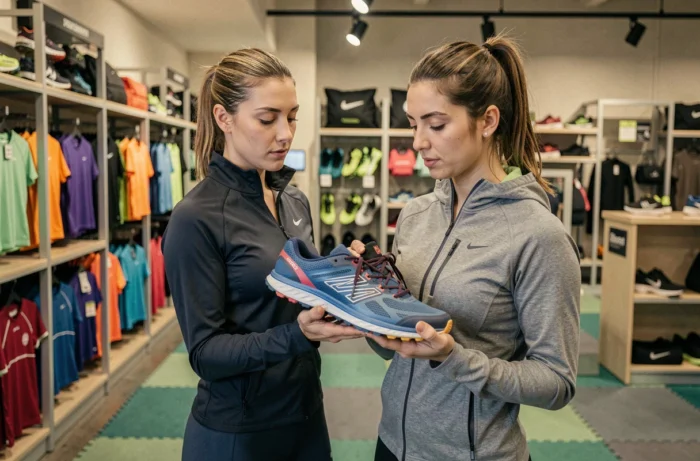
A sports equipment is defined by its ability to meet the biomechanical constraints of a specific discipline. Choosing your sports gear is not just about comparing prices or brands: it is primarily about identifying the stresses the body undergoes during exertion, and then selecting each piece of equipment based on measurable technical criteria.
Safety standards and compliance: the first filter for choosing sports equipment
Before discussing comfort or performance, sports equipment must meet codified safety requirements. The ISO 20957-1:2024 standard, recently published, regulates fixed indoor training devices (exercise bikes, rowing machines, ergometers). It defines testing methods for mechanical resistance and stability, gradually replacing the old EN 957.
For equipment installed outdoors for public access (health trails, urban fitness apparatus), the EN 16630 standard serves as a reference. Its application remains voluntary, but it conditions the design, dimensions, and weather resistance.
Checking a device’s compliance with these standards helps eliminate products whose durability or safety are questionable. An exercise bike compliant with ISO 20957-1:2024 has undergone load and fatigue tests that non-certified models have not. By consulting sports equipment on Free Sport, it is possible to compare product sheets that specify these certifications.
Sports shoes and cushioning: understanding what the sole really changes
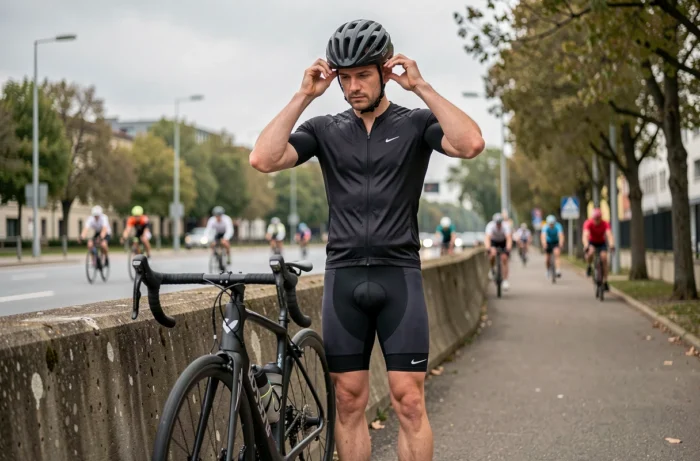
The choice of shoes draws a disproportionate amount of attention, and for good reason. The midsole is the component that absorbs shocks with every stride, every push-off, every landing.
A recent trend leans towards very thick foams, known as “maximalist.” The idea seems logical: more cushioning should reduce joint stress. Available data nuance this hypothesis. Recent research suggests that more cushioning does not automatically reduce the risk of injury. An excess of thickness can alter the biomechanics of the stride, increase lateral instability, and shift stresses to other areas (knee, hip).
The relevant criterion is therefore not raw thickness, but the suitability between the type of foam, the weight of the user, and the surface of practice. For road running, a reactive and moderately thick foam suits the majority of profiles. On trails, the rigidity of the sole and the profile of the lugs take precedence over pure cushioning.
Pronation and corrective shoes: a criterion often misused
Pronation (the natural internal rotation movement of the foot during support) has long served as the main criterion for directing towards “motion control” shoes. This paradigm is being questioned. The type of stride alone is not enough to predict the risk of injury, and so-called “anti-pronation” shoes do not show systematic benefits for moderately pronating runners.
A test in a specialized store (video analysis of the stride on a treadmill) remains useful, but it should be cross-referenced with other factors: injury history, weekly training volume, flexibility of the posterior chain.
Technical clothing and thermal regulation: beyond marketing
The textile worn during exertion influences thermoregulation, skin comfort, and, indirectly, the duration for which a level of intensity can be maintained. The choice relies on three measurable parameters.
- Moisture management: synthetic fibers (polyester, polyamide) wick sweat away faster than cotton. A garment that remains soaked with sweat increases the weight carried, creates friction, and accelerates cooling in cool weather.
- Fabric weight: a weight that is too light allows cold to penetrate in winter conditions, while a weight that is too dense traps heat in summer. The layering system (base, insulation, protection) remains the most reliable method for adapting to temperature variations.
- Seams and cuts: flat seams or thermally welded seams limit irritation in friction areas (armpits, crotch, feet). In long efforts, this detail makes a tangible difference in comfort.
Adapting sports equipment to your level and training frequency
A practitioner who runs twice a week does not have the same needs as a runner who accumulates five weekly sessions. The training frequency determines the rate of wear of the equipment and thus the relevant level of quality.
For occasional use, entry-level or mid-range equipment fulfills its function without compromising safety. Investing in high-end gear is justified when the volume of practice is sufficient for differences in durability, residual cushioning, or breathability to be felt over several months.
Signs of wear to watch for
Replacing running shoes when the sole is visibly worn smooth is a common but late reflex. The loss of cushioning occurs well before the visible wear of the outer sole. An unusual feeling of fatigue in the calves or knees after usual distances may signal that the foam has lost its energy return properties.
- Midsole that no longer returns to its shape after manual compression
- Upper deformed or sagging on one side
- Loose seams or fabric torn in flex areas
For home fitness equipment, abnormal play in the joints, squeaking, or irregular resistance indicate a worn part that needs replacing, not just a minor inconvenience.
The choice of sports equipment becomes more relevant when it is based on verifiable technical criteria rather than marketing promises. Checking compliance with current standards, cross-referencing the type of sole with one’s personal biomechanics, and adapting the quality level to actual practice frequency: these three filters are sufficient to eliminate the majority of purchasing errors.