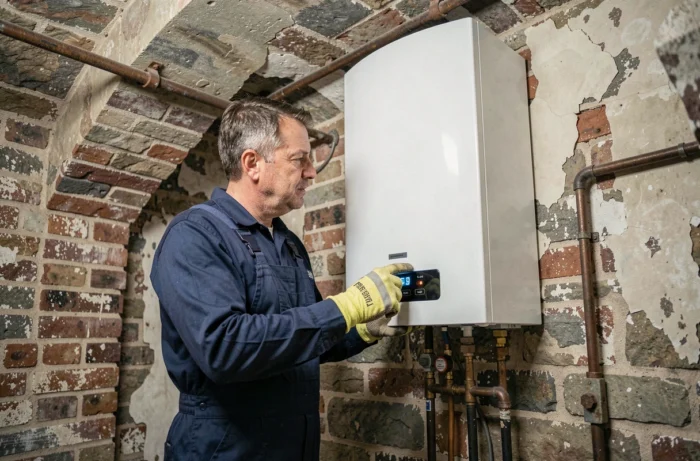
In a Brussels building constructed before 1945, replacing an old boiler with a condensing model is not just about choosing a brand. The old structure imposes technical constraints that recent constructions ignore: unsuitable chimney flues, high-temperature heating circuits, limited space in the boiler room. Installing a condensing boiler in an old building in Brussels requires addressing these issues one by one, even before considering efficiency.
Shared chimney flue: the first technical obstacle
Many old buildings in Brussels share a collective chimney flue between several apartments. This flue, designed for traditional atmospheric boilers, poses a concrete problem with condensation.
A condensing boiler emits flue gases at low temperatures. These gases, laden with moisture, cool as they rise in a masonry flue. Water condenses on the walls, attacks the joints, and ultimately degrades the structure of the flue.
To remedy this, two options exist. The first is to line the existing flue with stainless steel or polypropylene sheathing, resistant to acidic condensates. The second, more radical option, involves installing an individual flue outlet on the facade, bypassing the collective flue.
The choice depends on the building’s configuration. Lining works if the flue is straight and accessible. A facade flue requires the agreement of the co-ownership and, in some Brussels municipalities, a building permit. Before deciding, the condition of the flue should be analyzed by a certified heating engineer capable of confirming technical feasibility.
To fully understand the specific constraints of rental buildings, the process of installing a condensing boiler in Brussels deserves to be studied in advance with a complete diagnosis of the existing system.
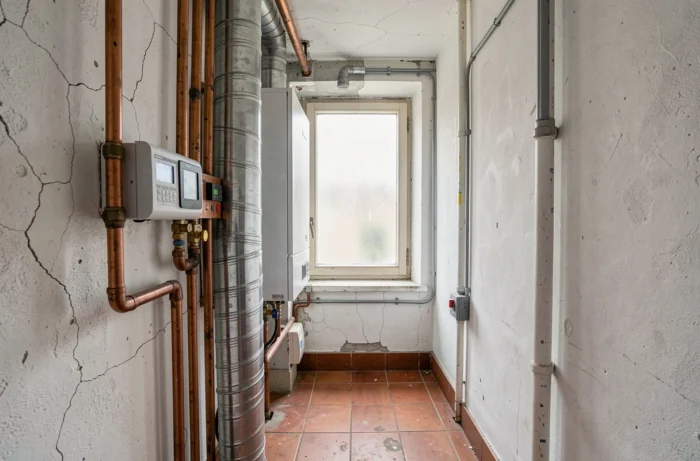
Return water temperature and old radiators: a couple to reconcile
You may have noticed that some cast iron radiators heat less effectively after the boiler replacement? This phenomenon is explained by the return water temperature in the circuit.
A condensing boiler achieves its best efficiency when the return water temperature drops below 55 °C. It is under this condition that the water vapor contained in the flue gases condenses and releases its latent heat. Above this threshold, the boiler operates, but without truly condensing: it behaves like an improved conventional boiler.
Old cast iron radiators were sized to operate with high-temperature water. Lowering the supply temperature without making any changes effectively reduces the useful heat exchange surface. The result: rooms take longer to heat or do not reach the desired temperature.
Adapting the circuit without replacing everything
Replacing all the radiators is not always necessary, nor desirable in an old building. Several adjustments can allow condensation to work with an existing circuit:
- Add additional radiators in undersized rooms to increase the overall heat exchange surface, allowing for a lower supply temperature
- Install a climate control system that automatically adjusts the water temperature based on the outside temperature, maximizing actual condensation hours
- Prioritize insulating the building (roof, walls, windows) to reduce heating needs, allowing for operation at lower temperatures without loss of comfort
- Check the hydraulic balancing of the circuit so that each radiator receives the flow appropriate to its size and the room it serves
Insulation plays a crucial role. Insulating before replacing the boiler allows for the selection of a less powerful model, thus cheaper to purchase and better sized for actual condensation operation.
Brussels regulations and gradual phase-out of fossil fuels
Brussels legislation is rapidly evolving regarding building heating. Since January 1, 2025, new projects or those considered new can no longer include a natural gas or oil boiler at the time of submitting the building permit.
For old buildings, this prohibition does not yet apply to simple boiler room renovations. However, starting from January 1, 2030, major renovations will be affected. An old building undergoing significant transformation (structure, facades, technical installations) will no longer be able to receive a fossil boiler if the project requires a permit and a PEB requalification.
In practice, replacing an outdated boiler with a condensing model is still permitted today as part of a standard renovation. But this choice commits to the lifespan of the device. A boiler installed in 2026 will still be operational in 2040. Anticipating the transition to renewable solutions, such as a hybrid heat pump, can prevent a premature replacement mandated by regulations.
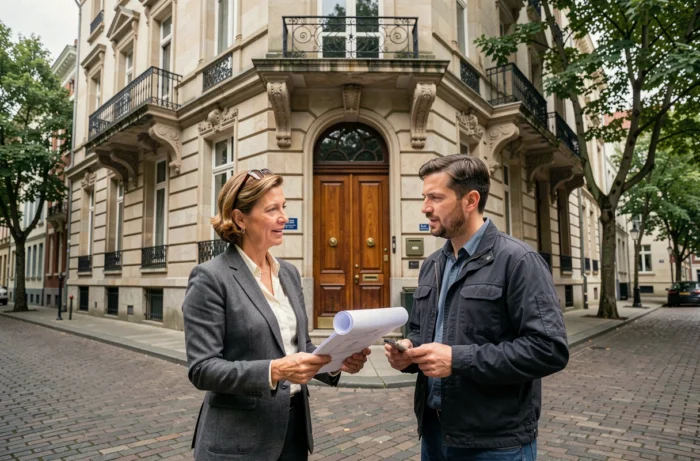
Power and sizing in a poorly insulated building
Why does sizing pose a problem in old buildings? Because the thermal losses of an uninsulated building are difficult to estimate without a serious energy audit.
Oversizing the boiler is a common mistake. A device that is too powerful for the building performs short cycles: it heats up quickly, stops, then restarts. This yo-yo operation prevents condensation and accelerates component wear.
A certified heating engineer must calculate the necessary power considering the actual losses of the building, not just its surface area. If insulation work is planned, the calculation must include the future performance of the structure. When a boiler is over 14 years old, Brussels regulations also require a heating system diagnosis to assess performance and determine the investment to consider.
The choice between gas and oil depends on the existing connection. Condensing oil boilers exist but require a tank and storage space often absent in small Brussels buildings. Natural gas remains the most common fuel for condensation in dense urban environments.
Installing a condensing boiler in an old building in Brussels remains a relevant investment when the project is well-prepared. The flue, the radiator circuit, and the level of insulation of the building form an inseparable whole. Addressing only one of these aspects without the others limits the actual efficiency gain and turns a high-performing technology into a mere like-for-like replacement.