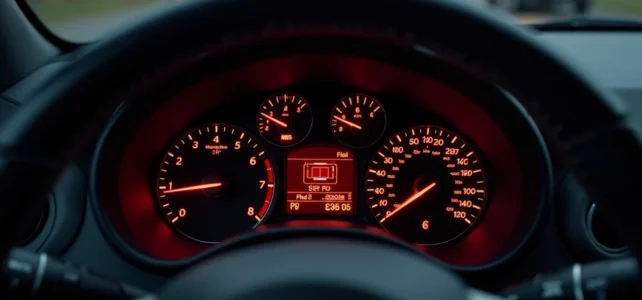
When the red engine light and the ESP warning light illuminate simultaneously on a Nissan Juke, the first question concerns the actual severity of the malfunction. These two alerts do not belong to the same electronic circuit, but their simultaneous activation often points to a common mechanical or electronic issue that affects both engine management and vehicle stability.
Sensors shared between engine management and ESP on Nissan Juke
Most forums treat the engine light and the ESP light as two distinct faults. However, on the Nissan Juke, these two systems share several sensors and data from the engine control unit. When the control unit detects an anomaly that alters torque or RPM, it disables stability control for safety.
See also : How to Choose the Best Site to Plan and Organize Your Next Trip
The table below summarizes the most common causes documented by Juke owners, distinguishing those that only activate the engine light from those that trigger both warnings.
| Identified Cause | Engine Light Only | Engine Light + ESP | Associated Symptom |
|---|---|---|---|
| Faulty ignition coil | Yes | Sometimes | Misfires, vibrations |
| Clogged air mass sensor | Yes | Yes | Progressive loss of power |
| Crankshaft sensor | Yes | Yes | Engine timing issues, difficult restarts |
| Stretched timing chain (1st generation Juke) | Yes | Yes | Metallic noise at startup, loss of power |
| Faulty ABS/wheel sensor | No | Yes (ESP only) | Fixed ESP light without loss of power |
This crossover shows that the simultaneous activation of the engine and ESP lights almost always indicates an engine-related problem, not a braking issue. The ESP system goes into fault mode because it no longer receives reliable data from the engine control unit, not because the brakes or wheel sensors are at fault.
See also : Tips and Advice to Preserve the Shine of Your Plant-Based Jewelry
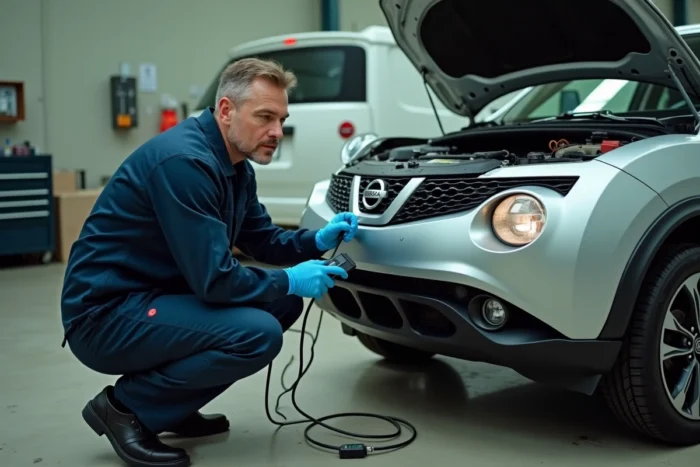
To delve deeper into the meaning of each warning light and the associated fault codes, a dedicated article on the red engine light and ESP illuminated on Nissan Juke details the specific combinations for this model.
Timing chain and power loss on 1st generation Juke
On the first generation of Nissan Juke, a recurring scenario in owner feedback is: an abnormal elongation of the timing chain first causes a metallic noise at startup, then the engine light comes on, followed by a gradual degradation of performance.
The control unit detects a misalignment between the crankshaft position and the camshaft position. This misalignment is enough to put the engine into limp mode, which automatically disables the ESP. The driver then experiences a marked loss of power, often around 3,000 RPM according to testimonials on Nissan forums.
The temptation to simply restart the vehicle and continue driving is strong, as the engine light may temporarily turn off. Not addressing the issue can lead to complete engine failure. A diagnosis with fault code reading (via an OBD scanner) can confirm or rule out this hypothesis without disassembly.
Reacting to the dual engine and ESP lights: important actions
Not all red warning lights justify an immediate stop at the roadside. However, the combination of the red engine light and ESP requires appropriate driving in the following minutes.
- Immediately reduce speed and avoid exceeding 2,500 RPM. The limp mode already limits power, but forcing the engine in this state accelerates wear on the affected parts.
- Do not turn off and restart the engine in the hope of clearing the lights. If the fault is real, this action temporarily masks the problem without resolving it, and the fault code may be erased from memory, complicating future diagnosis.
- Connect an OBD scanner as soon as possible to read the stored fault codes. Codes starting with P0 (powertrain group) point to the engine, while C codes concern the chassis and wheel sensors.
- If the engine light is flashing (instead of staying steady), stopping is imperative: a flashing light indicates misfires that could damage the catalytic converter.
The distinction between a steady light and a flashing light is often overlooked. A flashing red engine light requires stopping the vehicle, while a steady light allows for a short trip to a garage, provided the engine is not stressed.

Permanently lit ESP light and technical inspection since 2026
One aspect rarely addressed by owners concerns the administrative consequences of a constantly lit ESP light. Since January 2026, a continuously lit ESP light may lead to a re-inspection at the technical inspection. The electronic stability system is part of the mandatory safety equipment on new vehicles in Europe, and a fault indicated by the dashboard now falls within the points of verification.
For Juke owners who have been driving with a lit ESP light for several months (which is common according to discussions on forums), this regulatory change is significant. Ignoring the warning is no longer just a mechanical risk; it is also an obstacle to passing the technical inspection.
The cost of a dashboard light diagnosis at a mechanic remains moderate compared to that of a re-inspection followed by urgent repairs. Identifying the cause in advance, whether it is a simple oxidized ABS sensor or a timing chain issue, allows for planning the repair instead of having to deal with it unexpectedly.
On the Nissan Juke, the combination of the red engine light and ESP illuminated directs the diagnosis towards the powertrain in the vast majority of cases. The ESP light usually turns off by itself once the engine fault is resolved, without any specific intervention on the stability system.