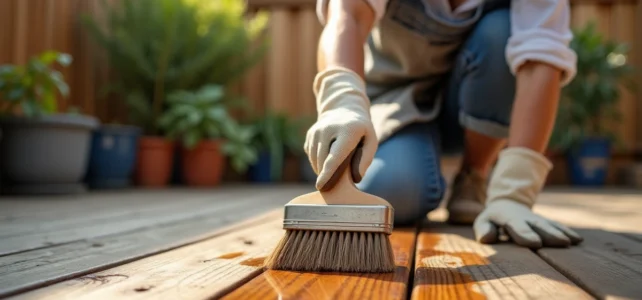
Pine or Douglas wood terraces have a flaw that their owners often discover after installation: resin drips appear on the surface of the boards, sometimes for several seasons. This phenomenon particularly affects poorly dried softwoods, which are increasingly common in the market for budget terraces. Removing this resin without damaging the wood or compromising subsequent treatments requires knowledge of certain technical constraints that usual guides overlook.
Before choosing a method to remove pine resin from a terrace, it is essential to understand why some common products pose problems in the medium term. Greasy solvents like white spirit or mineral spirits dissolve the resin quickly, but they leave an invisible film that alters the wood’s absorption.
Further reading : How to Choose the Ideal Dimensions for a Pool Without Paying Taxes?
On a board treated with solvent, a saturator or a brightener applied afterward does not penetrate in the same way as on neighboring boards. The result: visible color differences between the cleaned areas and the rest of the terrace.
Fresh or hardened resin: two distinct cleaning approaches
Pine resin changes nature when exposed to air. Fresh, it remains soft and sticky. After a few days of sun exposure, it hardens and forms a translucent crust that adheres well to the wood fibers.
See also : The best tips for quickly finding a job online in 2024
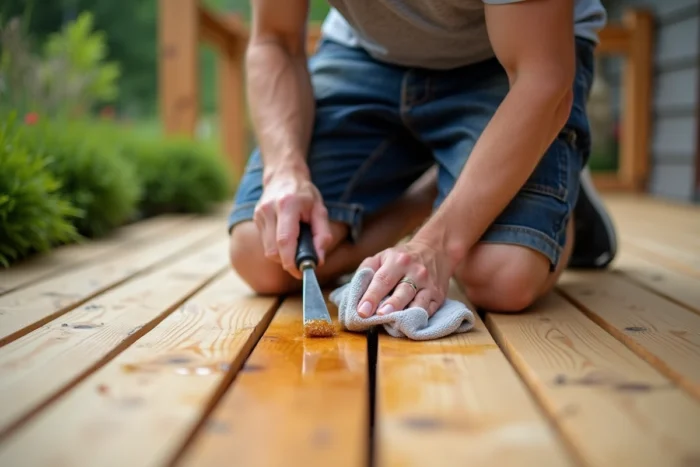
On a recent drip, vegetable oil (sunflower, olive) applied with a cloth softens the resin in a few minutes. It is then sufficient to wipe and clean the area with soapy water. This method leaves no chemical residue on the wood and does not alter its ability to receive a finishing treatment.
For a hardened stain, the cold technique works well: placing a bag of ice on the area for several minutes weakens the resin, making it brittle. It can then be peeled off in small pieces using a plastic spatula, without scratching the board. The remaining residues can then be treated with vegetable oil or diluted household alcohol.
Household alcohol and baking soda: effectiveness and limits on terrace wood
Household alcohol (denatured ethanol) dissolves pine resin without leaving a greasy film. Applied to a clean cloth, it helps eliminate stubborn residues after an initial pass with oil or cold. However, on untreated raw wood, repeated use may slightly dry out the surface fibers.
Baking soda, mixed with warm water to form a paste, offers a mild abrasive power useful against ingrained marks. This method is suitable for hardwood or composite terraces but requires more caution on soft pine where the fibers easily lift under friction.
Here are the household products suitable for cleaning resin on wooden terraces, along with their usage precautions:
- Vegetable oil: effective on fresh resin, with no risk to the wood or subsequent finishes. Rinse with soapy water afterward to avoid greasy stains.
- Household alcohol: dissolves hardened resin without leaving a film but may dry out the wood if used pure and repeatedly. Dilute with one-third water on softwoods.
- Baking soda paste: mild abrasive for persistent residues. Apply with a microfiber cloth rather than a hard brush, especially on pine.
- Hot soapy water: sufficient as a complement after the above methods. Use black soap or Marseille soap, never acidic industrial detergent.
Pressure washer on terrace resin: a false ally
The reflex to use a pressure washer seems logical when faced with a stained terrace. However, on pine resin, it is a bad idea in most cases. High pressure lifts the fibers of softwood and digs microscopic grooves into the boards, especially on pine or Douglas. The surface becomes rough, retains more moisture, and grays faster.
Cleaning professionals have adopted a different approach in recent years: low pressure combined with overheated water, close to gentle steam. This technique removes organic dirt (resin, moss, tannin) without lifting the fibers or digging into the wood. However, it remains reserved for providers equipped with specific machines.
For individuals, a simple garden hose with moderate pressure is sufficient to rinse an area treated with oil or alcohol. The spray should remain at a distance from the board and directed along the grain of the wood.
Treating resin before applying a saturator or brightener
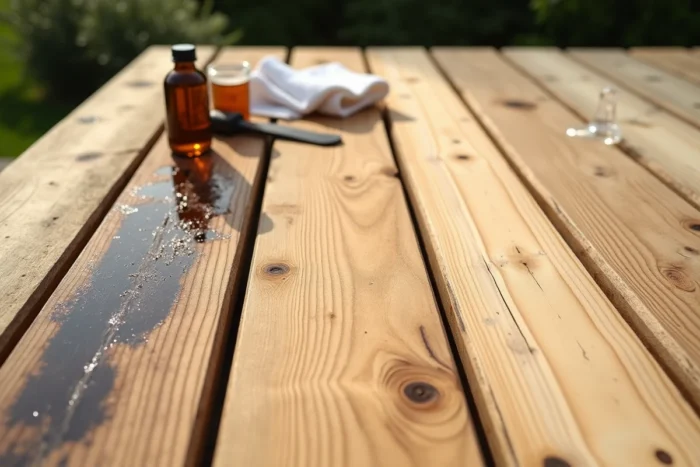
This technical point is rarely mentioned in public tutorials, yet it conditions the final result of a terrace renovation. Resin drips must be removed before any cleaning-brightener-saturator cycle. Unremoved resin prevents the finishing product from penetrating evenly into the wood.
Professional saturator applicators report that untreated resinous areas create lighter stains after the product is applied, as the wood remains impermeable there. On a pine terrace, where knots and pockets of resin are common, a methodical pass board by board before the finishing treatment avoids these defects.
Order of operations for a pine terrace
- Remove all visible resin (cold + vegetable oil or household alcohol) before starting the general cleaning of the terrace.
- Apply the brightener only on clean, dry wood, free of greasy residues or solvent.
- Allow to dry according to the manufacturer’s recommendations before applying the saturator, ensuring that the former resinous areas absorb the product in the same way as the rest.
On new softwood terraces, drips may return during the first two or three years, especially in hot weather. A localized cleaning with vegetable oil after each heat episode remains the least aggressive method to keep the surface clean without compromising the finish.
Attempting to permanently eliminate resin from wood that still naturally produces it leads to repeated and sometimes counterproductive interventions: it is better to integrate this occasional cleaning into the regular maintenance of the terrace.